
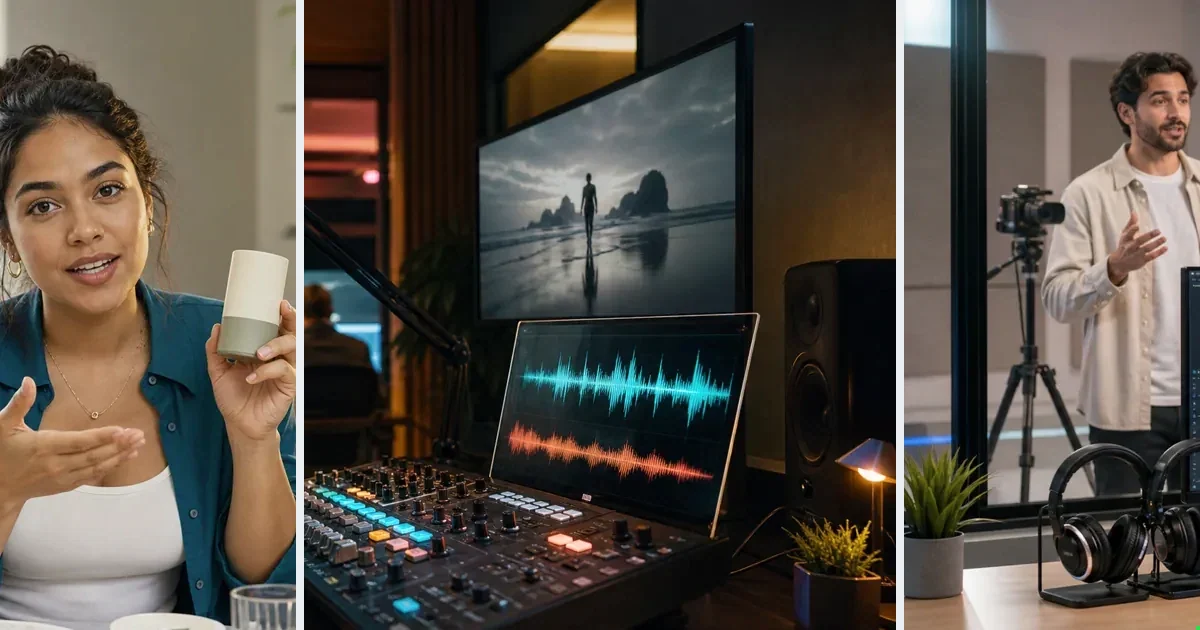
Different buyers entirely: Creatify sells to performance marketers making feed ads; Synthesia sells to enterprises making training video. Picking between them usually means someone misread one of them.
Side by side
| Creatify | Synthesia | |
|---|---|---|
| Buyer | DTC/performance marketers | L&D and comms teams |
| Output shape | 9:16 feed ads | Horizontal presenter video |
| Product-ad workflow | Yes, template-led | No |
| Enterprise trust | Standard | Best-in-class |
| Pricing | Subscription | Per-seat enterprise tiers |
The question that actually decides it
Not "which is better" — "what's your job?" Match the tool to the output shape you need weekly, the person who'll operate it, and what you pay in months you don't produce. Most regret in this category is a job mismatch, not a quality gap.
Who should pick Creatify — and who should pick Synthesia?
Pick Creatify if you're a DTC or performance marketer whose week is measured in 9:16 feed ads shipped. Its template-led product-ad workflow is built for that exact output shape, and a subscription is defensible when the tool runs every week.
Pick Synthesia if you're an L&D or comms team producing horizontal presenter video at enterprise scale. Best-in-class enterprise trust is the feature you're actually paying for, and per-seat tiers make sense at that altitude.
Pick neither if the real job is product video ads for an ecommerce catalogue and nobody wants to write scripts. That's the third option below.
The third option
If the job behind this comparison is product video ads, there's a route neither takes: start from the product URL. v4v extracts the product data, builds the brief, and generates directed 9:16 ads on Seedance 2.0 / Kling 3.0 / Veo 3.1 at ~$2.44 per video, pay-per-use, no subscription. Different category than either tool above — which is sometimes exactly the point.
What does the math look like at real volume?
Say you test 10 product ads a month. On v4v that's 10 × 349 credits = 3,490 credits — about $24 at the $7-per-1,000-credit pack rate. In practice you'd buy one $35 pack (5,100 credits): it covers roughly 14 videos, and leftover credits never expire, so a slow month costs nothing. Any subscription works the other way round: the price is fixed, so per-video cost is the fee divided by whatever you actually shipped — and it climbs in exactly the months you produce least. Full numbers in the v4v pricing guide.
What changes in week one if you try the third route?
- Day 1 — paste a product URL into Studio; the creative brief builds itself from the product data.
- Render one directed 9:16 ad on Seedance 2.0: 349 credits, about $2.44.
- Put it next to your current creative. A July 2026 merchant test on r/ecommerce found 8–10s video demos lifted Shopify product-page conversion ~12% — with AI clips performing equal to phone-shot ones.
- Repeat for a second SKU — products, avatars and styles persist between sessions, so run two is faster than run one.
- Total exposure: the $7 starter pack. No seat, no cancellation step.
The third option: start from the product
If the job is product ads, skip the script — paste a URL and judge the output.
Try v4vFrom $7 · no subscription, ever · credits never expire
FAQs
Can I use Creatify and Synthesia together?
Teams do — they solve different halves. Check total subscription load against actual monthly output first.
Which is cheaper?
Depends on utilization — both are subscriptions, so effective per-video cost is price ÷ videos you actually make. Run last month's real numbers.
Does either tool start from a product URL?
No — Creatify's product-ad workflow is template-led and Synthesia has no product-ad workflow at all. Starting from the URL is v4v's route: paste it, the brief auto-builds, and a directed 9:16 ad renders for about $2.44.
What does a 10-video test batch cost on the v4v route?
10 × 349 credits = 3,490 credits — about $24 at the $7-pack rate. A $35 pack (5,100 credits) covers roughly 14 videos, and unused credits never expire.
What output shape does each tool produce?
Creatify makes 9:16 feed ads; Synthesia makes horizontal presenter video; v4v's Studio makes directed 9:16 product ads (currently 720p). Match the shape to where the video will actually run.
Do v4v credits expire if I pause testing for a month?
No. Credit packs are one-time purchases, there's no subscription, and credits never expire — a quiet month costs $0.
Facts checked July 16, 2026. Competitor claims from public pricing pages; verify before relying on them.