
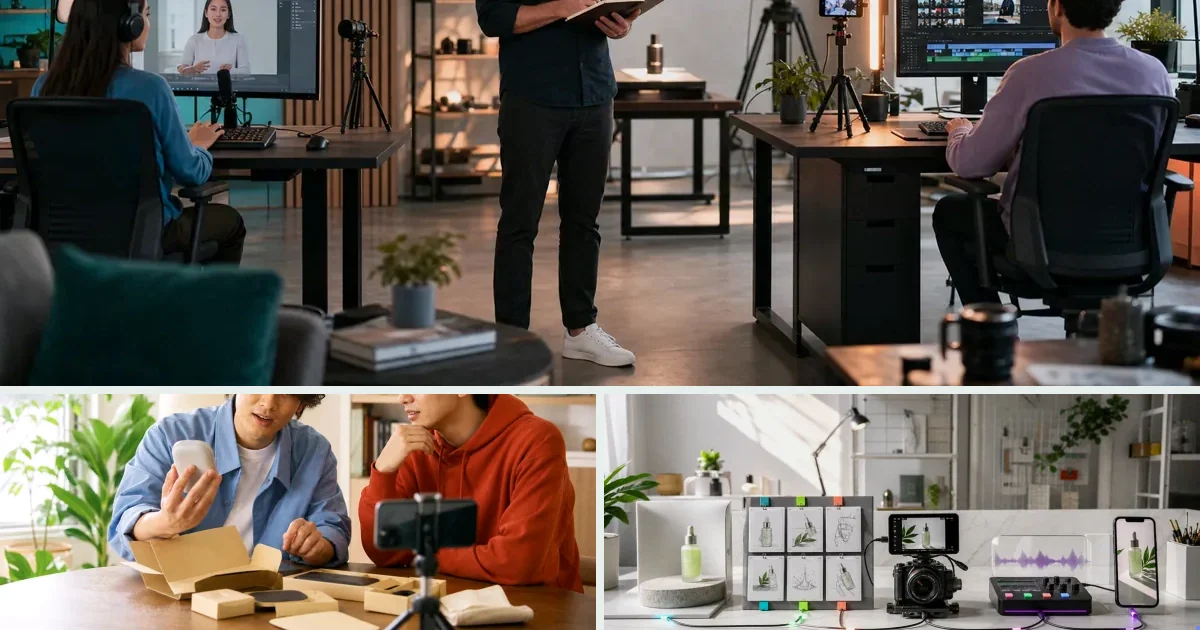
Unboxing turns packaging into perceived value: package reveal required, first reaction required. Category research puts its impact highest in jewelry and beauty — premium categories where the box is part of the product — with strong effect on accessories and gadgets. It works because it's a demo wearing an emotion: the viewer rehearses receiving the product. In v4v, unboxing pairs with the First Wear and Gift Moment scenarios (discovery and warmth), and deliberately not with ownership scenarios — you can't unbox something you've had for months, and audiences feel that logic break even when they can't name it.
Real examples — generated with v4v
The format rules
- Required: package reveal · first reaction
- Pairs with scenarios: First Wear, Gift Moment
- Logic guard: never combine with "already owns it" stories (Compliment Test, Favorite Piece) — the scenario system blocks these pairings for a reason.
- Model tier: Seedance for testing; Kling 3.0 when materials (silk, foil, metal) need to read as premium.
Why it converts
The reveal compresses three purchase-drivers into seconds: anticipation (emotion), contents (information), and packaging quality (value signal). For giftable products it also answers the real question — "what will it feel like to give this?"
Make one in this format now
Paste a product URL, pick the format — the director handles scene, light and pacing.
Try v4vFrom $7 · no subscription, ever · credits never expire
FAQs
Which categories should lead with unboxing?
Jewelry, beauty, giftables, premium accessories. Skip it for utilitarian restocks where the box is irrelevant.
How long should an unboxing ad run?
8–15 seconds: reveal by second two, product hero by second five, reaction and CTA close.
Facts checked July 16, 2026. Competitor claims from public pricing pages; verify before relying on them.