
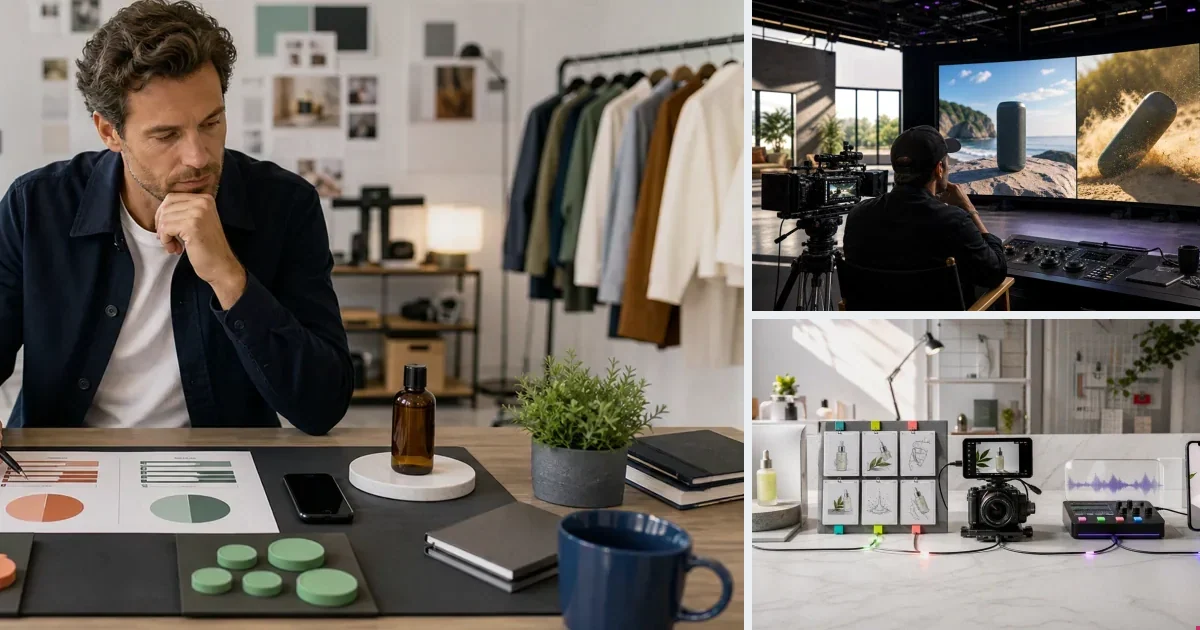
The TV-spot is the anti-UGC: cinematic camera work, visual storytelling and premium lighting are required; selfie shots and creators speaking to camera are forbidden. It's the format for luxury positioning — where polish signals quality instead of killing trust — and it pairs with the Luxury Detail and Luxury Story scenarios (craftsmanship, meaningful moments, ambient audio instead of voiceover). Use it deliberately: for most DTC feed placements UGC outconverts polish, but for premium lines, brand campaigns and gift-season creative, the TV-spot earns its higher-tier render (Veo 3.1 or Kling 3.0).
Real examples — generated with v4v
The format rules
- Required: cinematic camera · visual storytelling · premium lighting
- Forbidden: selfie framing · direct-to-camera creator speech
- Pairs with scenarios: Luxury Detail, Luxury Story (ambient audio recommended — let the visuals speak)
- Voice style: Luxury Enthusiast — controlled, composed, minimal
When to spend on polish
- Premium/luxury lines where the ad is a brand statement
- Gift-season campaigns (pairs with unboxing in the same flight)
- Scaling a proven concept with real budget — the Veo 3.1 render of a winner
Make one in this format now
Paste a product URL, pick the format — the director handles scene, light and pacing.
Try v4vFrom $7 · no subscription, ever · credits never expire
FAQs
Isn't cinematic AI video what Higgsfield does?
It's their specialty; in v4v the TV-spot is one format among eight, on the same credit balance — you're not choosing a platform per aesthetic.
Cheapest way to test a TV-spot concept?
Rough-test the scene on Seedance 2.0, then render the winner on Veo 3.1.
Facts checked July 16, 2026. Competitor claims from public pricing pages; verify before relying on them.