
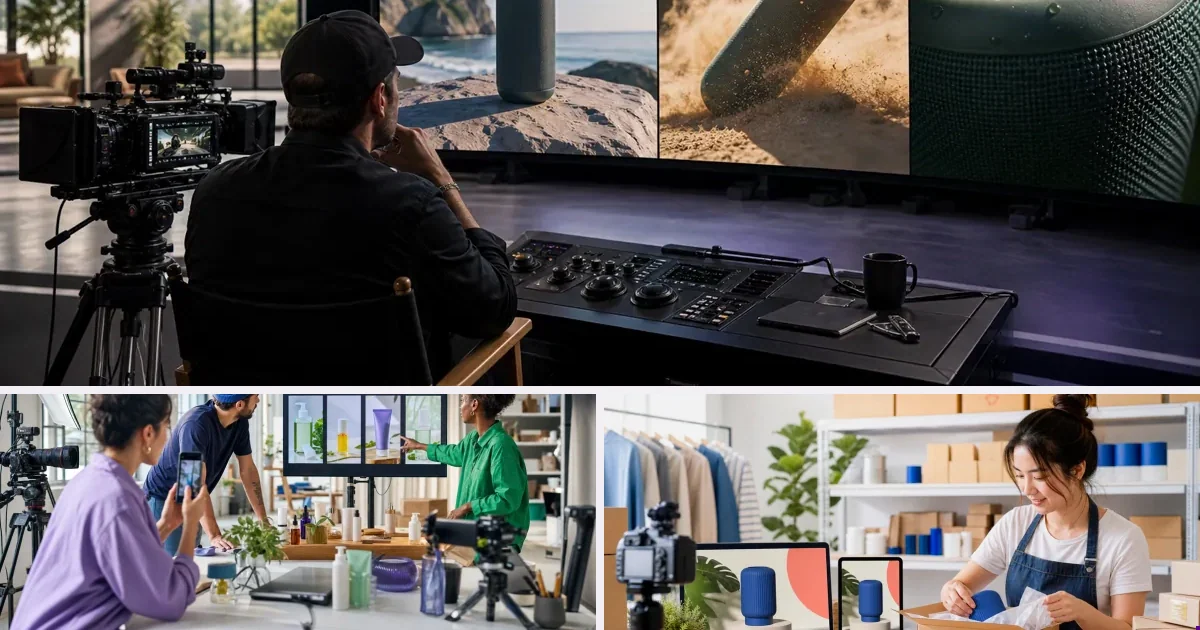
An AI video ad generator is a tool that turns a product input — a URL, images, or a brief — into a finished video ad. Under the hood they differ enormously. Template engines (e.g. Creatify) assemble avatar scripts over a fixed rendering pipeline: fast, consistent, capped. Model-stack systems (e.g. v4v) generate from current foundation models (Seedance 2.0, Kling 3.0, Veo 3.1) and automate the creative brief from the product URL. The questions that actually separate tools: What builds the brief — you or the system? Can you choose the generation model? What does one video cost, and do credits expire? Does your setup persist across products, or do you rebuild every time?
The anatomy of the category
- Input layer — product URL scraping, image upload, or manual script
- Brief/creative layer — auto-generated direction vs. you writing it
- Generation layer — proprietary engine vs. named model stack
- Output layer — aspect ratios, captions, formats for each placement
- Pricing layer — subscription seats vs. pay-per-output
Why the brief layer matters most
Generation quality converges across the market; the labor is in the brief. Tools that extract product data and write the direction themselves remove the step that costs marketers the most time per ad.
Paste a product link. The brief builds itself.
Generate product videos, UGC-style ads and hooks in about 5 minutes.
Try v4vFrom $7 · no subscription, ever · credits never expire
FAQs
Are AI ad generators allowed on Meta and TikTok?
Yes, within each platform's synthetic-media and ad policies.
What should one video cost?
Benchmark: ~$2.44 per 8-second clip on v4v pay-per-use; subscription tools effectively charge $8–$15+ per video at typical usage.
Facts checked July 16, 2026. Competitor claims from public pricing pages; verify before relying on them.