
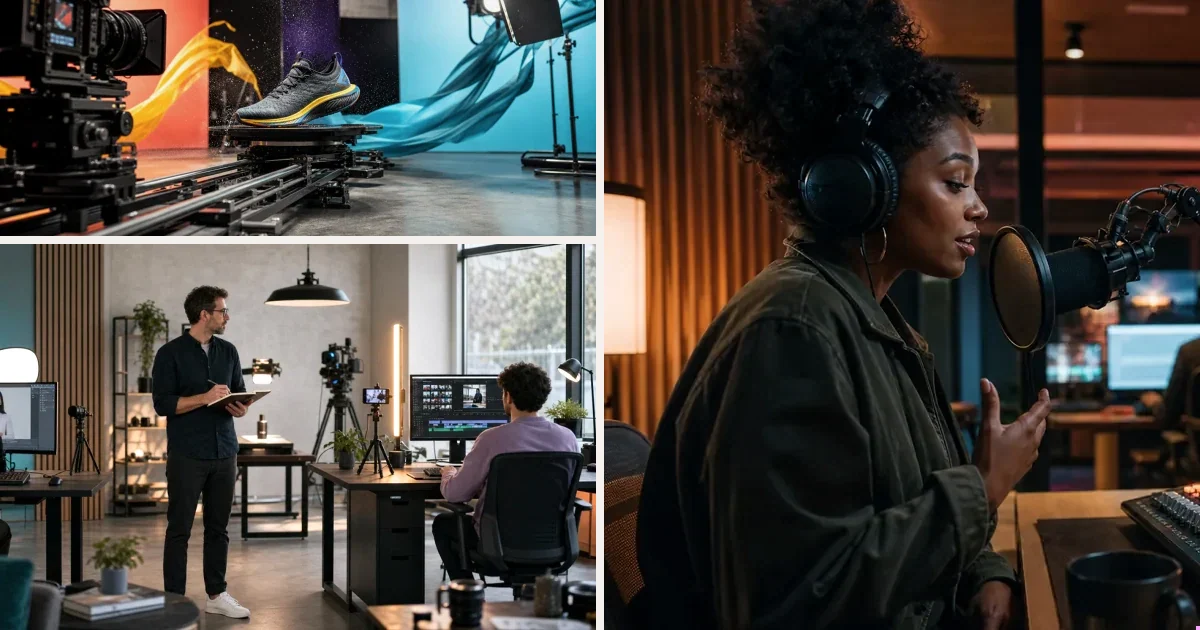
Motion copy AI extracts the movement style from one video — camera motion, object animation, pacing — and applies it to a new scene. Why it matters: on TikTok and Reels you have roughly one second to hold attention, and hook rate (viewers watching past second three) responds to motion more than any other creative variable. When one motion pattern proves it hooks, motion copy replicates it across ten SKUs without rebuilding — turning a lucky win into a repeatable system. In v4v's stack, Kling 3.0 handles motion copy; the differences between models come down to how well product detail survives the applied movement at 9:16.
Where you'd use it
- A rotation-plus-light-sweep hook that worked → apply to every SKU
- Matching motion language across a campaign for brand consistency
- Animated-text-and-product openers that deliver the message by second two
The discipline
Know your per-generation cost before iterating at volume: ten motion-copy variants add up. On pay-per-use credits with no expiry (v4v), volume testing is a budgeting choice, not a race against a billing cycle.
Paste a product link. The brief builds itself.
Generate product videos, UGC-style ads and hooks in about 5 minutes.
Try v4vFrom $7 · no subscription, ever · credits never expire
FAQs
Does motion copy change my product's appearance?
It shouldn't — the point is applying motion while preserving product detail. Review output; quality varies by model.
What does a motion-copy ad cost?
Same as a standard generation on the chosen model — e.g. ~349 credits (~$2.44) for an 8-second Seedance clip; Kling 3.0 costs more per clip.
Facts checked July 16, 2026. Competitor claims from public pricing pages; verify before relying on them.