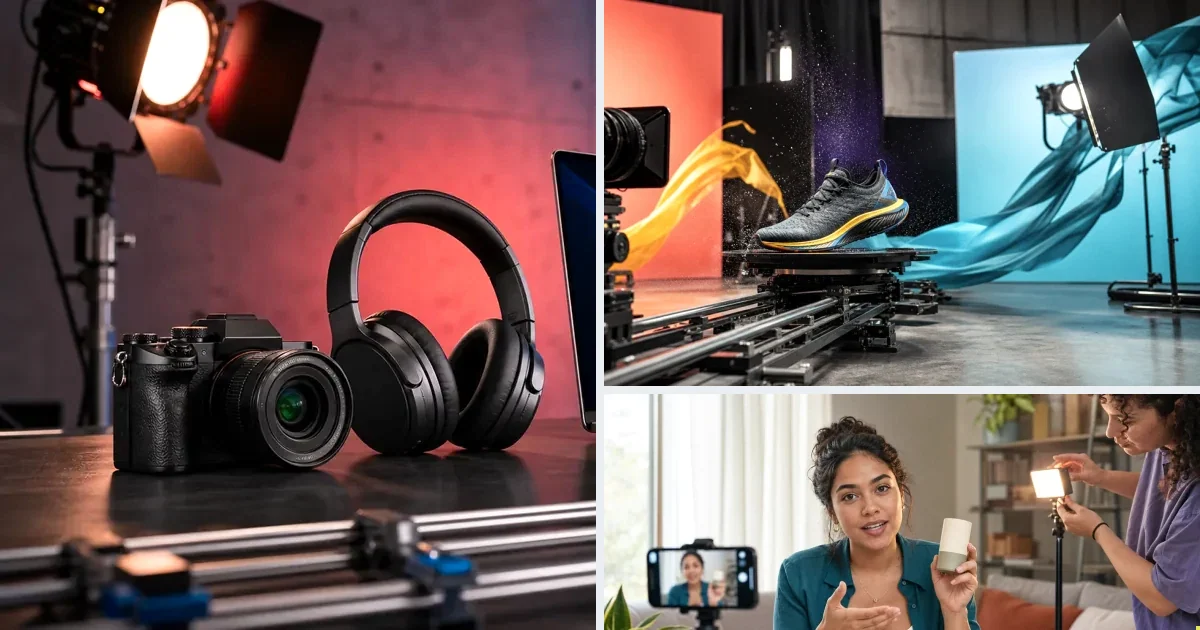
Video-to-video takes existing footage as input and transforms it: new style, new subject, adjusted motion, upgraded quality. In ad production its most useful cousin is motion transfer — extracting the movement pattern from a winning clip and applying it to a new product (Kling 3.0's motion copy in v4v). Full restyling matters less for product ads (the product must stay honest) but earns its keep for backgrounds, seasonal reskins and converting rough footage into finished looks.
The motion-transfer use case
A hook motion that stopped thumbs once will again: replicate the winning pattern across SKUs without re-prompting from scratch.
The honesty boundary
Restyle environments freely; never restyle the product itself into something it isn't. Preservation rules apply to transformations as much as generations.
Paste a product link. The brief builds itself.
Generate product videos, UGC-style ads and hooks in about 5 minutes.
Try v4vFrom $7 · no subscription, ever · credits never expire
FAQs
Video-to-video vs regenerating from scratch?
Transfer/restyle when the source's structure is the value; regenerate when only the idea is.
Can it fix low-quality footage?
It can lift look and consistency, but garbage-in limits apply — a clean generation usually beats rescuing a bad clip.
Facts checked July 16, 2026. Competitor claims from public pricing pages; verify before relying on them.